
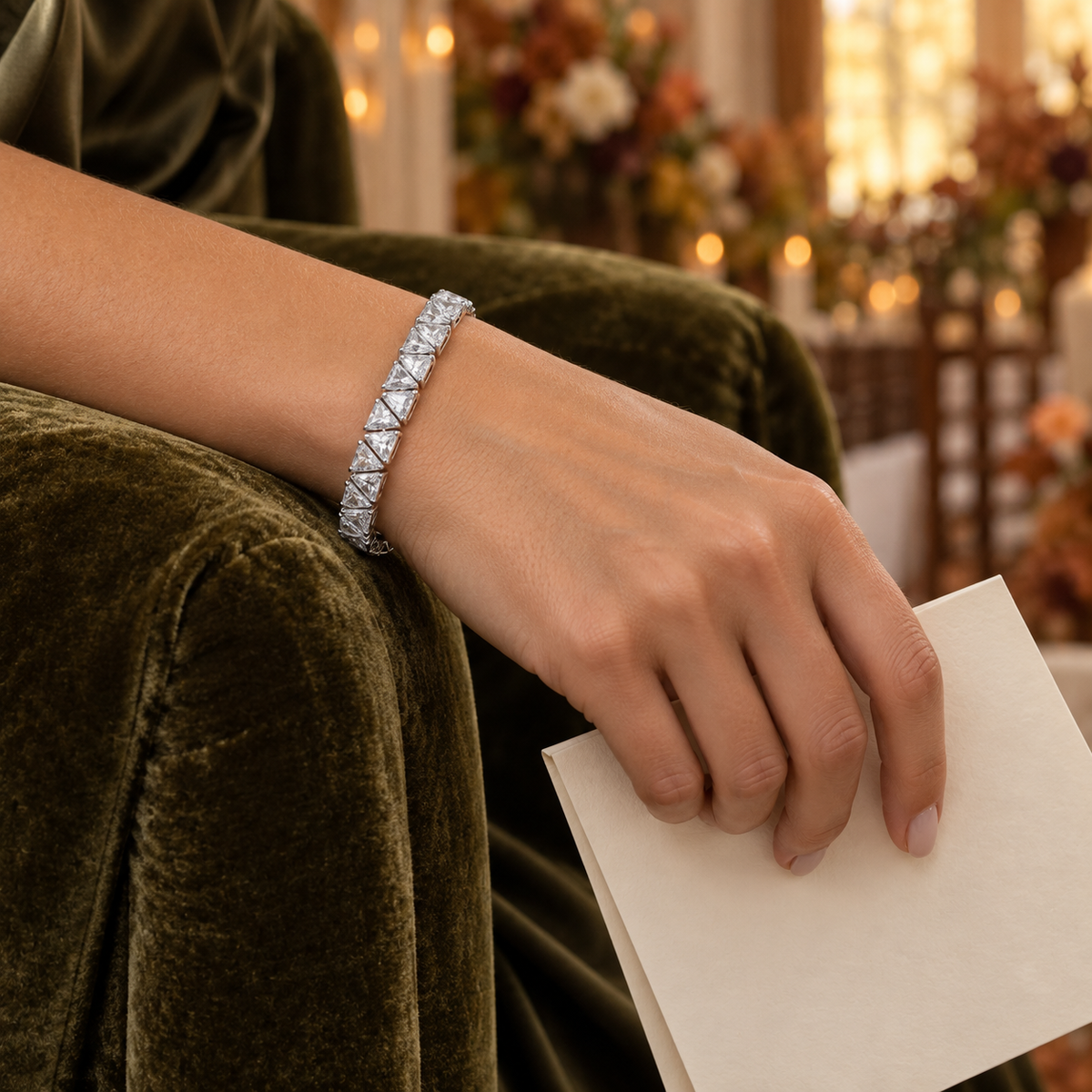
Fall wedding guest jewelry should feel intentional without competing with your outfit, the venue, or the person getting married. The easiest way to get there is not a bigger jewelry stack. It is choosing one clear focal point, then keeping the rest of the look quiet. This guide breaks down a practical three-piece plan for dressy fall events, from garden ceremonies to city receptions.
The goal is simple: add light-catching detail where it shows, keep the silhouette easy, and make sure your accessories still feel like you.
Start With the Outfit’s Lines
Before choosing jewelry, look at the neckline, sleeve length, and fabric movement. A high-neck dress already creates visual structure near the face. A satin slip dress leaves more open space. A long sleeve or tailored blazer makes the wrist a natural place for a finishing detail.
For most fall guest looks, choose one area to lead: ears, hand, or wrist. That decision keeps the outfit from feeling busy in photos and makes getting dressed much faster. It also gives you a useful edit rule: if a piece does not support the focal point, leave it off.
Think in terms of scale rather than formality. A compact detail can look polished with a printed midi dress, while a clean, continuous line can work beautifully beside a velvet or crepe column dress. The best match is the one that follows the outfit’s shape instead of fighting it.
Let the Bracelet Carry a Bare-Wrist Look
Sleeveless dresses, elbow-length sleeves, and neat cuffed blazers leave room for a bracelet to do real visual work. The Silver Tone Divinity Cubic Zirconia Tennis Bracelet gives that area a streamlined row of cubic zirconia stones, so it reads as a composed accent rather than a collection of separate charms.

This is the piece to consider when your dress has a simple bodice and the wrist will be visible while holding a clutch, greeting people, or raising a glass. Style it as the only jewelry item in that scene; a clean sleeve and an unfussy bag help its line stay visible. If your outfit has a strong floral print or textured fabric, the bracelet’s regular rhythm can bring a little order without adding another color story.
A practical check: move your arm as you would during the event. A bracelet should feel like a finishing detail, not something you need to keep arranging. When the dress is doing a lot, this kind of single, continuous sparkle can be enough.
Use a Ring for a Close-Up Moment
A ring is a thoughtful option when the dress has statement shoulders, a detailed neckline, or hair that covers the ears. It creates interest at a smaller scale, which works especially well for cocktail receptions and seated dinners. The Silver Tone Classic Solitaire Cubic Zirconia Ring centers the look on one clear cubic zirconia stone and a simple silver-tone band.

Treat it like a punctuation mark. It pairs naturally with a solid-color dress, a slim evening bag, and a manicure you already feel good wearing. Because the design has a single focal stone, it is an easy choice when you want a little brightness without changing the overall mood of the outfit.
Keep the rest of the hand relaxed: skip extra rings on the same hand and avoid a heavily decorated clutch if you want the silhouette to stay clean. For photos, a solitaire-style shape reads clearly in close moments—holding a program, adjusting a sleeve, or reaching for a dessert plate—without requiring a full jewelry stack.
Frame the Face With Drop Hoops
When your dress has a simple neckline or your hair is tucked behind the ears, earrings can carry the whole accessory plan. The Silver Tone Drop Hoop Earrings with Cubic Zirconia bring a curved drop-hoop shape with cubic zirconia detail close to the face, making them a natural fit for low buns, soft waves, and sleek ponytails.
For a daytime ceremony, pair them with a dress in a warm neutral, deep green, berry, or navy and keep the neckline open. For an evening reception, let the earrings be the bright point beside a darker dress. The useful styling move is restraint: no necklace is needed when the earrings are the lead. That empty space around the collarbone is what makes the shape feel considered.
If your hair is down, test the earrings with your finished hairstyle rather than in front of the mirror with your hair clipped back. You want enough movement and visibility to notice them, but not so much that the details disappear into the hair.
Build a Three-Piece Plan, Not a Three-Piece Stack
The three products in this guide are options for three different focal points, not a suggestion to wear them all together. Choosing one is often the most polished route. Here is a quick way to decide:
- Choose the tennis bracelet for a bare wrist, simple sleeves, or an outfit that needs a clean horizontal detail.
- Choose the solitaire ring for a quieter, close-up accent when the neckline or shoulders already have personality.
- Choose the drop hoops when the face and hairstyle are the outfit’s strongest visual area.
Once you choose the focal point, match your other accessories to its energy. A small clutch, one finish in your shoe hardware, and a simple outer layer are enough. You do not need every item to sparkle. In fact, a softer matte fabric beside a single jewelry detail often makes that detail more noticeable.
This approach also helps when the invitation has a broad dress code. For “cocktail,” use the earrings or bracelet to sharpen a smooth dress. For “formal,” use the ring or bracelet as a controlled highlight beside a longer silhouette. For an outdoor ceremony, let the outfit’s fabric and color set the mood, then choose just one jewelry area to complete it.
What to Consider Before You Leave
Comfort matters at a long event. Choose the piece you will not be tempted to remove during dinner or on the dance floor. Make sure earrings work with the hairstyle you will actually wear, and give a bracelet or ring a brief movement test with your bag and coat.
Also consider the photo balance. If your dress has shine, sequins, or a dramatic print, favor the smallest focal point. If the dress is minimal, a bracelet or drop hoop can give the look more definition. The aim is not to make every accessory visible from across the room. It is to make the whole outfit feel finished at conversation distance.
FAQ
Should I wear a necklace with drop hoop earrings?
Usually, no. If the drop hoops are your focal point, an open neckline without a necklace gives them more space. Add a necklace only if the earrings are very subtle and the dress needs detail at the collarbone.
Is a tennis bracelet appropriate for a daytime wedding?
Yes, when it is the only jewelry focus. Pair it with a simple dress and keep the rest of the accessories understated for a relaxed daytime balance.
How many rings should I wear as a wedding guest?
One can be plenty, especially when it has a clear focal stone. A single ring keeps the hand polished without making the accessory mix feel crowded.
What jewelry works with long sleeves?
A ring is often the easiest choice because it stays visible. If the sleeve has a clean cuff or ends above the wrist, a bracelet can work too.
Should jewelry match my bag and shoes exactly?
No. Coordinating the overall finish is enough. Let one jewelry piece lead, then choose accessories that feel calm beside it instead of trying to match every detail.
The Takeaway
A strong fall wedding guest look does not need more jewelry; it needs one clear point of focus. Choose the wrist, hand, or face, then let that single detail give your outfit its finishing note.


